


The advent of AI in our time, particularly Generative AI, is one of the greatest and revolutionary leaps in technological advancements we have seen. It has shaped and reshaped the professional socio-economic landscape. Every profession, everywhere, with any measure of interaction/dependence with modern technology and artificial intelligence (AI) is being radically redefined, the software development industry included.
It is true that Generative AIs are continuing to evolve, becoming increasingly dependable and easy to interact with. They are becoming an integral component of the software design cycle. And rather than just merely a matter of helping software developers, it involves the transformation and optimization of the daily workflows of these professionals.
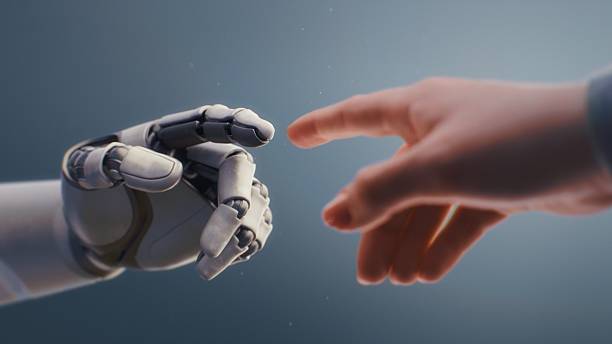
As you’ll come to realize shortly, questions surrounding the possibility of AI replacing human developers are largely driven by our fear of a growth cycle we’re yet to fully comprehend. It’s a misapplication of our mental energies.
Instead, we can channel efforts to understanding and maximizing the synergy between human and machine efficiency. This way, our common AI tools become formidable co-developers rather than replacements.
What do I mean? Let’s go.
How AI Is Changing Software Development Right Now
Code Generation Assistance
The most apparent change is probably in the code generation process.
Tools like GitHub Copilot and chat-based assistants such as ChatGPT have transformed what previously could have been hours of code writing into a guided code-writing session. Developers no longer have to sit, looking at blank screens and wondering how to start; rather, they explain intent – and the system provides succinct responses.

Now, this doesn’t nullify the need for skill; instead, it increases the standard. Developers will need to learn how to prompt, read, and critically refine. Their vital tasks will therefore evolve from just manually writing each line of code to filtering outputs.
Automated Testing & Debugging
Traditionally, testing is one of the most time-consuming stages of development. AI will drastically help shorten this cycle.
With modern AI tools, developers can:
- Intelligently propose unit tests
- Identify runtime behavior anomalies
- Determine probable causes of bugs
- Forecast code vulnerability
This helps teams to anticipate failures instead of merely reacting to them.
Does this imply that the AI perfects the work? No, it really doesn’t. It simply means the range of feedback is shorter. And in tech, shorter cycles usually suggest improved products.
Shift to Orchestration
This is where the more profound transformation is.
Developers are slowly leaving behind being pure builders to being orchestrators.
The developer, in most aspects, becomes a systems thinker – a person who integrates APIs, AI services, automation pipelines, and human review into a harmonious whole. The expertise becomes more architectural intelligence rather than just raw coding expertise.
Increased Productivity & Speed
What used to take days of research and documenting can now be accomplished in hours. It is possible to generate documentation automatically. Suggestions can be made immediately through code refactoring.

Two notable implications of this acceleration will therefore be that developers will have faster product iterations and higher expectations. And with this increase in speed, the market is adapting and making swiftness a competitive factor.
Abundant Software Creation
As you can imagine, technical barriers are being leveled in software development. In turn, more people will be able to create basic software systems: lay founders, junior developers, and small teams are now capable of delivering products that previously needed superior experience, expertise, and manpower.
This means that we are having more developers, increasing competition, innovation, and noise. Consequently, the distinguishing factors will now shift to more intrinsic properties like quality, flexibility, innovation, clarity, and strategic thinking.
Challenges of AI in Software Development
However, the pros that AI offers software engineers aren’t without their downsides. Some of the challenges associated with the use of AI in software development include:
Over-reliance on AI
We have concerns about the chance of excessive dependence on AI among software engineers. When this happens, we can expect their overall creativity and innovation to significantly dwindle. We really don’t want this.
So to guard against this, developers are being taught to see these AI tools as vital aids and actual tools, not alternatives to their own expertise.
Data security and privacy threats
Since these AI systems are “garbage in, garbage out,” there’s also the issue of data privacy and security. Feeding the system insufficient data would surely lead to suboptimal performance; feeding the system too much sensitive information also poses cybersecurity risks.

What then? Skilled developers’ supervision! Maintaining human oversight over the quality and quantity of data being fed to the system, in accordance with professional cybersecurity standards, will ensure software security and reduced vulnerabilities.
Biases in Gen AIs
Generative AI models also have their unique “biases.” These systems are actually built with frameworks that train the model with a voluminous quantity (corpus) of data.
This is why LLMs (like ChatGPT, Gemini, Claude, etc.) have varying strengths and weaknesses. Unfortunately, this can lead to biased outputs in software, especially in software designed to interact with users.
By regularly reviewing AI outputs, developers will mitigate biases in software systems, ensuring balanced outcomes.
To Wrap Things Up
As we wrap up, the question won’t be “will AI replace developers?”; rather, it will be, what type of developers will thrive with the advent of AI?
As time progresses, it will become more obvious that the future of software development lies with those who think critically, architect intelligently, prompt precisely, and supervise responsibly – and that’s exactly what we do at The Nebula Tech.
Our virtual workspace is made up of a pool of professionals who are equipped with up-to-date know-how of AI systems, how to build interactive software, and global cybersecurity standards, we combine human expertise with AI. We build systems that work. We build with speed, precision, clarity, and strategic intent – all without compromising security and safety. Feel free to reach out to us today to build your own systems that work.